【Major Points】
Compression stockings help prevent the formation of blood clots and reduce postural hypotension.
- Compression stockings can prevent and treat varicose veins, and help reduce leg fatigue, swelling, and aching.
When putting on or taking off compression stockings, elevate your legs above heart level for about 15 minutes to promote venous blood return.
Handwash the stockings. Do not wring them out. Instead, gently blot them with a towel and allow them to air-dry.
Why should you wear compression stockings?
Compression stockings are used to help prevent the formation of blood clots, increase venous blood return, prevent postural hypotension, and reduce swelling or pain in the legs.
Who should use compression stockings?
1. It is recommended to wear compression stockings for individuals on long-term bed rest, those with paraplegia, after major surgery or severe fracture surgery, for varicose veins, or following great saphenous vein surgery of the lower legs.
2. For people who stand for long periods, those with obesity, or pregnant women, compression stockings can help prevent varicose veins.
What You Need?
- Compression stockings.
- Pillows.
What should I do?
- Put on the stockings first thing in the morning before getting out of bed.
- Lie down and place a pillow under your legs to elevate them above heart level for 15 minutes before wearing the stockings.
- Use your hand into the stocks and roll it down to the heel. Turn stockings inside out.(Figure 1) Turning the stockings inside out.
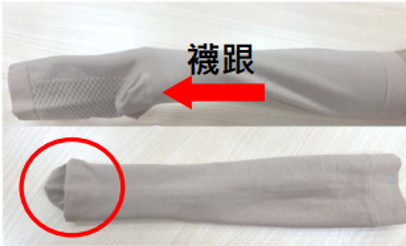
- Use both thumbs to support the inside of the stockings and align the heel of the elastic stocking with your own heel and rolling it down to the heel. Put your foot into the stockings and pull the stocking up to the heel .
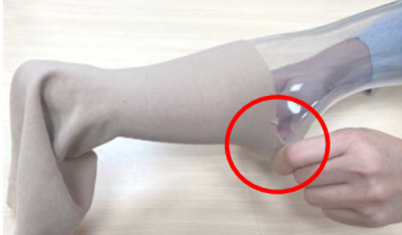 (Figure 2) Aligning the heel of the elastic stocking with your heel.
 - Pull the elastic stockings up your legs.
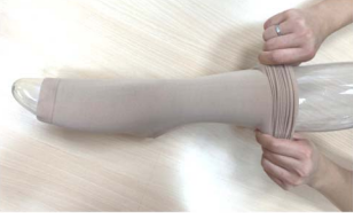 (Figure 3) Pulling the elastic stockings up step by step.
 - Put the elastic stockings on properly, adjust the wrinkles, and ensure they are flat.
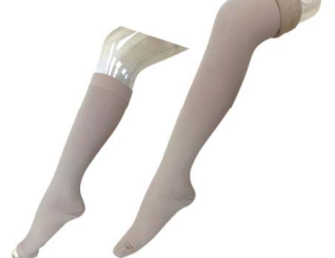 (Figure 4) Put them on properly and ensure they are flat.
 - When removing elastic stockings, begin with the thigh and move to the calf, holding the end of the stocking. After everting the stocking outward, slowly remove it from top to bottom. Use a pillow to elevate your lower limb above your heart to promote venous return.
Care principles:
- The best time to put on compression stockings is in the morning before getting out of bed. If you have already been up and about without wearing them, lie down and elevate your legs above heart level for 15 minutes using a pillow before putting the stockings on. It is recommended to wear the stockings before any out-of-bed activities.
- Pull the stockings up gradually to the desired height, smoothing them flat and lifting about 2 inches (5 cm) at a time.
- Always ensure your elastic stockings are flat. Avoid curling at the top to prevent increased pressure (purple toenails indicate that the stockings are too tight), potentially affecting blood circulation.
- After taking the compression stockings off, lift your legs above your heart for 15 minutes to avoid feeling uncomfortable for the pressure increasing.
- Every 8 hours should take off the stockings for 15~30 minutes. Be aware of the circulation and the skin condition. If your legs become red, inflammation, pale or feeling of numbness or tingling, stop wearing compression stockings.
- When putting on and taking off the compression stockings do not let the nail fingertip touch the surface. Take your watch or ring off, preventing the stockings from being damaged.
- Keep the stockings clean:
- Hand wash the stockings in cold or warm water with mild soap or detergent. Never wring. Blot dry in a towel and air dry.
- Please do not put your stockings in the washing machine and spin, do not use bleach or dryer or put your stockings under the hot sun.
- You can store your stockings in a box to avoid direct sunlight or lighting.
- If necessary, choose stockings with exposed toes so as to observe the circulation.
Reference:
- Lin, H.C., Lee, B.O., & Wu, H. Y., Lin, P.W., Chuang, W. L., Fang. C. L., Hsu, C. H. & Liu, Y. T. (2024). Application of shared decision making and knowledge translation to assist patients with venous leg ulcers in choosing pressure therapy aids. Medical Journal of South Taiwan, 20(2), 62–71.https://doi.org/10.6726/MJST.202412_20(2).0001
- Prandoni, P., Lensing, A.W.A., Prins, M.H., Villalta, S., Pesavento, R., Tormene, D., Noventa, F. & Palareti, G.(2022). Elastic compression stockings for prevention of the post-thrombotic syndrome in patients with and without residual vein thrombosis and/or popliteal valve reflux. Haematologica, 107(1).303-306.https://doi.org//10.3324/haematol.2021.279680
- Yang, X., Zhang. X., Yin, M., Wang, R., Lu, X., Ye, K. (2022).Elastic compression stockings to prevent post-thrombotic syndrome in proximal deep venous thrombosis patients without thrombus removal. Journal of Vascular Surgery Venous Lymphat Disord, 10(2), 293-299. https://doi.org/10.1016/j.jvsv.2021.06.023
Quiz
Please answer the following questions:
Nursing Instruction Satisfaction
The statistical results are not open to the public.
Please log in to rate
- Location
-
- Category
- Self-care / Home Care

Taipei Veterans General Hospital
No.201, Sec. 2, Shipai Rd., Beitou District, 
Taipei, Taiwan 11217, R.O.C.
Tel: +886-2-2871-2121 #04
- Smoking and chewing betel nut significantly induce oral cancer. Obesity will potentially increase the risk of breast cancer and colorectal cancer. Please control body weight and keep away from tobacco and betel nut.
- Information provided above can’t overcome physician's treatment and replace physician patient relationship.
© Copyright 2020 by Taipei Veterans General Hospital Nursing Department.
All rights reserved.
All rights reserved.