[Major Points]
- Bedridden patients require assistance from others to turn and reposition their bodies.
- Proper positioning can evenly distribute body weight and help prevent pressure injuries.
- Avoid placing further pressure on areas already showing signs of pressure damage.
What is body positioning and turning?
Body positioning and turning refer to assisting bedridden patients who are unable to move their limbs independently. With assistance, they can be repositioned in bed and placed into a comfortable posture.
When do patients need assistance with body positioning and turning?
Patients in the intensive care unit often need to remain in bed because of their illness or health condition, such as limb weakness caused by a stroke, total paralysis resulting from severe trauma, or prolonged sedation. Due to decreased mobility, these patients require assistance with body positioning and turning.
The Importance of assisting with body positioning and turning:
- Turning promotes blood circulation, prevents prolonged pressure on the skin and muscles, and helps avoid pressure injuries.
- Proper positioning helps evenly distribute the patient's body weight, reduces pain and skin damage. Contractures and deformities can be prevented by maintaining normal limb posture in bedridden patients.
Under what circumstances is assistance with repositioning not required?
- Individuals who are able to move independently.
- After examinations or treatments that require the patient to remain lying flat, such as lumbar puncture, kidney biopsy, or cardiac catheterization, in these circumstances, any body movement should be avoided.
Principles of patient repositioning in the intensive care unit (ICU):
When turning and positioning patients, nurses should work in pairs and assist patients to turn every 2-3 hours to ensure safety and prevent pressure injuries.
- Before assisting with body positioning and turning:
- Areas of the skin that already have pressure injuries should be kept free from further pressure. For example, if there is a pressure sore in the sacrococcygeal area (the lowest part of the spine near the bone in the middle of the buttocks), the patient should avoid lying flat on their back.
- Do not turn the patient within 30 minutes after feeding to avoid vomiting.
- Before turning, ensure that the bed wheels are locked to prevent the bed from moving.
- Lower the head of the bed, put down the bed rails, and adjust the bed to a comfortable height. Turn the patient over using proper techniques to save energy and prevent injuries.
- During assistance with body positioning and turning:
- Do not drag or pull the patient when moving them, as this may cause friction-related skin injuries.
- Assist with back percussion, massage, and range-of-motion (ROM) exercises according to the patient's condition.
- If the patient has wounds or drainage tubes, pay close attention to avoid pulling, kinking, or placing pressure on the tubes.
- Check the skin over bony prominences for integrity, and observe for redness or skin breakdown, such as around the ears and heels (Figure 1, Figure 2).
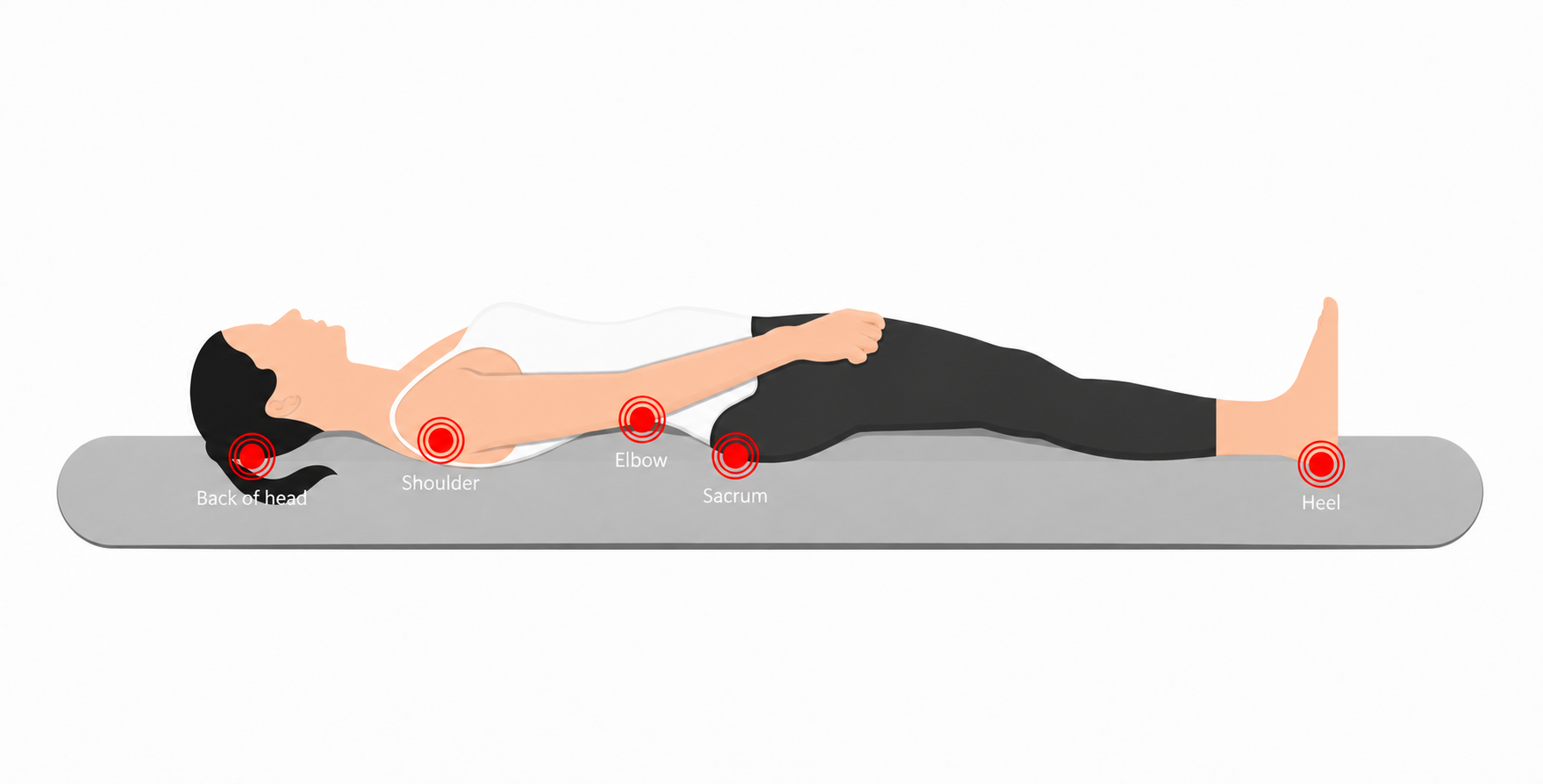
Figure 1: Areas of the body that are prone to skin injuries when the patient lies flat.
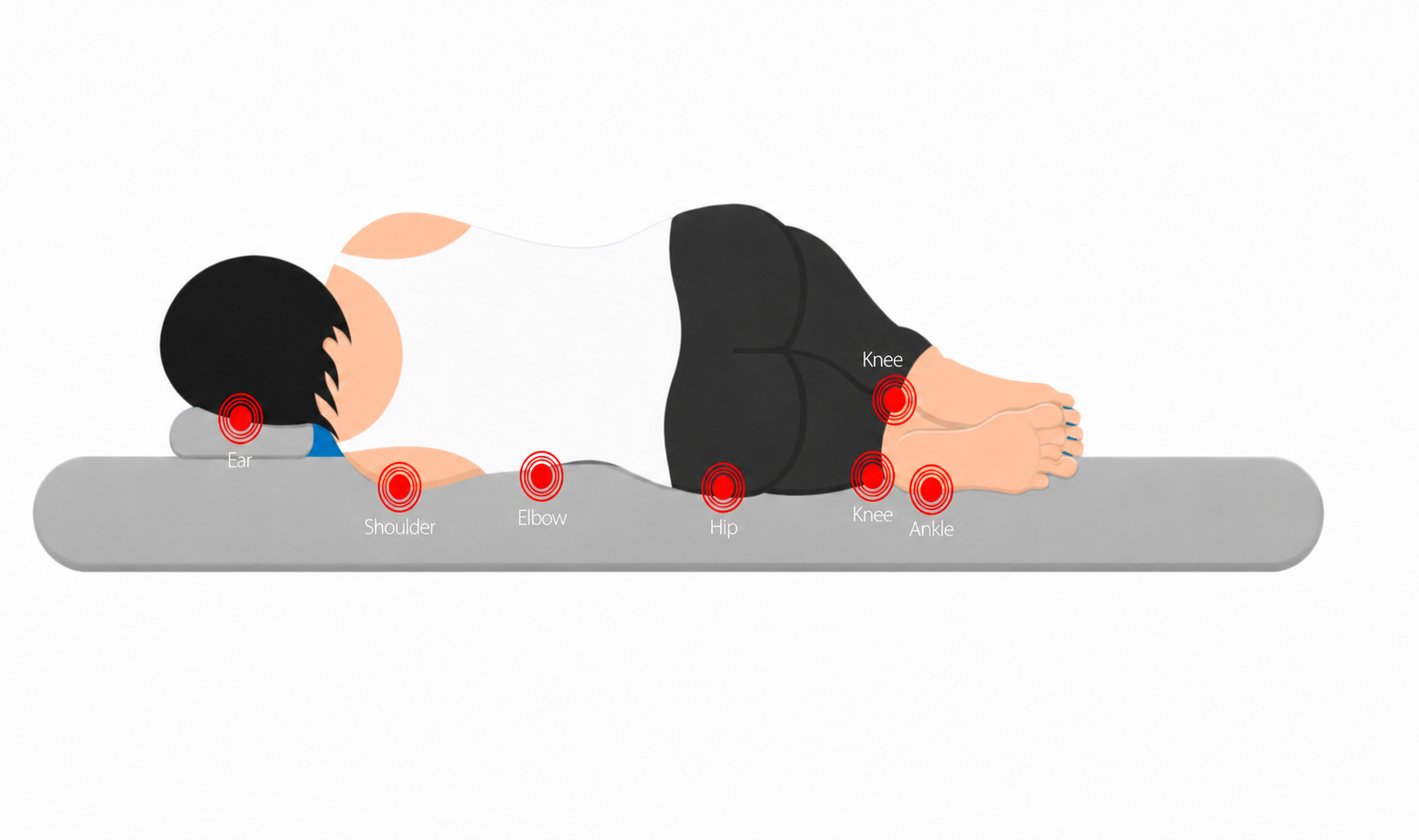
Figure 2: Areas of the body that are prone to skin injuries when the patient lies on their side. - Monitor the patient's facial expressions and responses during turning. Move slowly and gently, while ensuring patient warmth and maintaining their privacy.
- After assisting with body positioning and turning:
- After repositioning, ensure that the patient's body weight is evenly supported
- Small rolled towels for hand gripping, alternating pressure air mattresses, gel pads (solid gel mimicking human adipose tissue), and L-shaped pillows to relieve body pressure and prevent the development of pressure injuries
- Soft pillows, 30-degree triangular pillows, or cushions may be used to support the limbs and prevent pressure injuries.
- Depending on the patient's condition, use pillows or footboards to support the feet and prevent foot drop.
- Keep the patient's clothing and bed linens smooth and wrinkle-free to reduce pressure and prevent skin injuries.
- Always ensure that the bed rails are raised when leaving the patient's bedside to prevent accidental slips or falls.
How to assist the patient with turning and positioning?
- Hand wash and explain the procedure to the patient.
- Prepare three to four standard pillows and several small towel rolls (Figure 3).
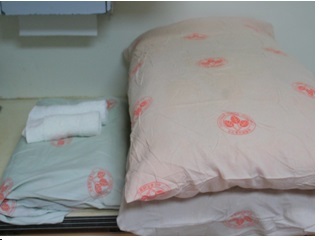
Figure 3. Required supplies. - Perform body positioning:
- When lying flat:
- The head should be aligned with the spine, with a small pillow placed under the head. The legs should remain straight, with a pillow supporting the knees and calves to elevate the heels and prevent pressure. The toes should point upward and a footboard or pillow may be used to prevent foot drop (Figure 4).
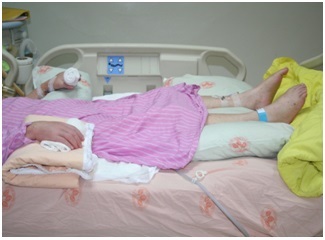
Figure 4. Positioning of the patient in the supine position. - The arms should be positioned alongside the body with the palms facing down. Rolled towels or small pillows may be used for support, provide rolled towels within the patient's grasp for hand gripping. (Figure 5).
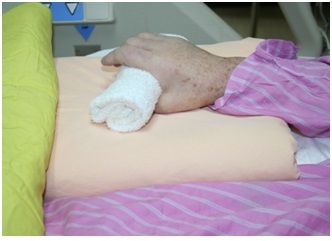
Figure 5. Supporting the hand with a rolled towel. -
Smooth the bed linens and raise the bed rails.
- The head should be aligned with the spine, with a small pillow placed under the head. The legs should remain straight, with a pillow supporting the knees and calves to elevate the heels and prevent pressure. The toes should point upward and a footboard or pillow may be used to prevent foot drop (Figure 4).
- When assisting the patient to lie on the left side:
- First, check all tubes and drainages to ensure that there is sufficient length to prevent pulling during turning. Place the patient's right hand on the abdomen and bend the right knee.
- The caregiver standing on the patient's left side should support the shoulder with one hand and the hip with the other while working with a second caregiver to turn the patient onto the left side. During this process, inspect the back skin and assist with back percussion or massage as needed.
- Place a pillow or a 30-degree triangular pillow, behind the patient's back, allowing them to rest gently against it to keep the sacrum suspended and relieved of pressure. Position the patient's right hand naturally on a pillow or across the chest (Figure 6).
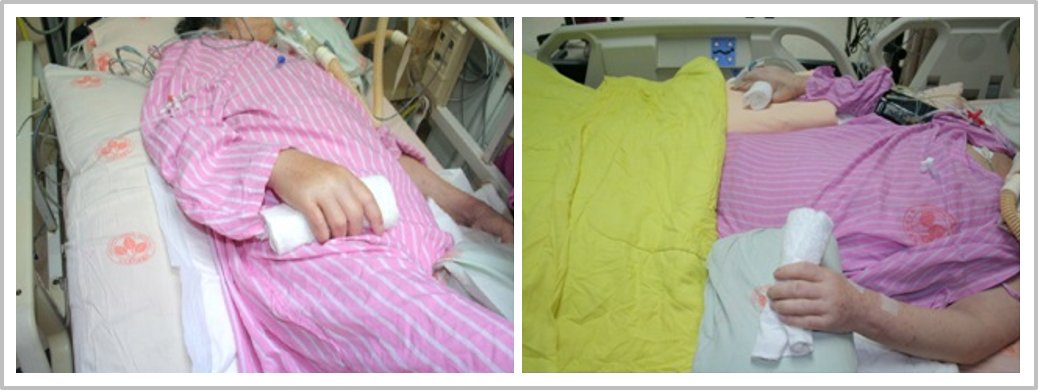
Figure 6. Positioning when lying on the left side. - Gently pull the patient's left shoulder outward to prevent it from being compressed under the body. The left hand can be elevated using a small pillow, and the patient may hold a rolled towel in the hand (Figure 7).
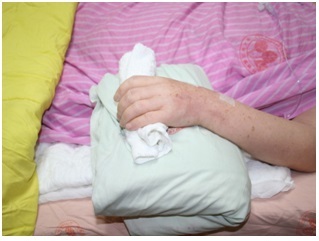
Figure 7. Supporting the arm with a small pillow. - Keep both legs extended and elevate the calves with pillows to ensure the ankles and heels are suspended off the mattress. A pillow may be placed between the legs to keep them separated. (Figure 8).
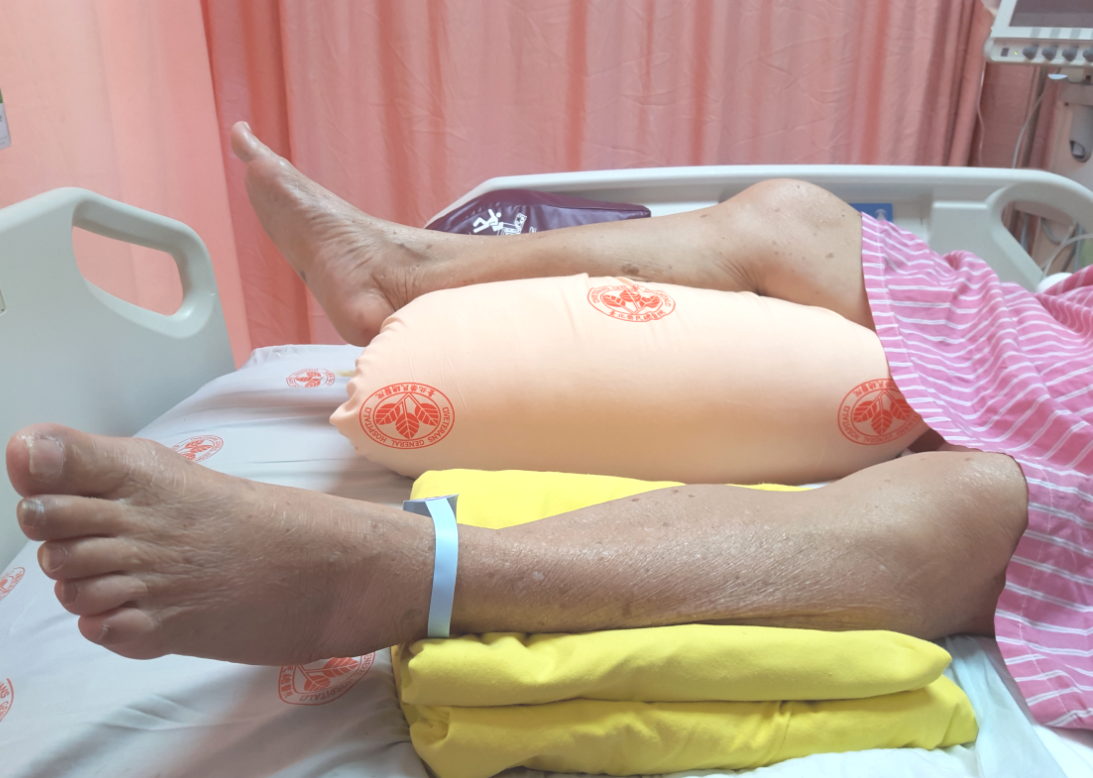
Figure 8. Separating the legs with a pillow. - Place a small rolled towel behind the patient's left ear to prevent pressure on the ear (Figure 9).
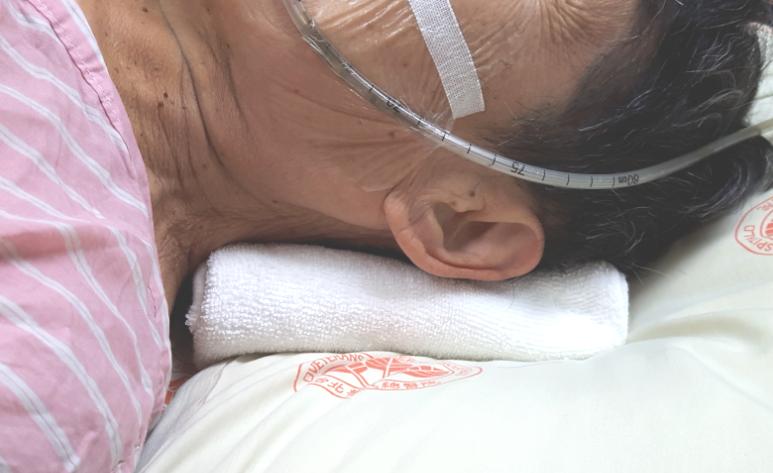
Figure 9. Placement of a rolled towel behind the ear. - After positioning, ensure that no part of the body is under excessive pressure and that the patient is comfortable. Smooth the bed linens and raise the bed rails.
- When assisting the patient to lie on the right side:
- First, check all tubes and drainages to ensure that there is sufficient length to prevent pulling during turning. Place the left hand on the abdomen and bend the left knee.
- The caregiver standing on the patient's right side should support the shoulder with one hand and the hip with the other while working with a second caregiver to turn the patient onto the right side. Inspect the back skin during the procedure and assist with back percussion or massage as needed.
- Place a pillow or a 30-degree triangular pillow, behind the patient's back, allowing them to rest gently against it to keep the sacrum suspended and relieved of pressure. Position the patient's left hand naturally on a pillow or across the chest.
- Gently pull the patient's right shoulder outward to prevent it from being compressed under the body. The right hand can be elevated using a small pillow, and the patient may hold a rolled towel in the hand.
- Keep both legs extended and elevate the calves with pillows to ensure the ankles and heels are suspended off the mattress. A pillow may be placed between the legs to keep them separated.
- Place a small rolled towel behind the patient’s right ear to prevent pressure on the ear.
- After positioning, ensure that no body part is under excessive pressure and that the patient is comfortable. Smooth the bed linens and raise the bed rails.
- When lying flat:
References
- Chaboyer, W., Latimer, S., Priyadarshani, U., Harbeck, E., Patton, D., Sim, J., Moore, Z., Deakin, J., Carlini, J., Lovegrove, J., Jahandideh, S., & Gillespie, B. M. (2024). The effect of pressure injury prevention care bundles on pressure injuries in hospital patients: A complex intervention systematic review and meta-analysis. International Journal of Nursing Studies, 155, 104768. https://doi.org/10.1016/j.ijnurstu.2024.104768
- Huang, L., Yan, Y., Huang, Y., Liao, Y., Li, W., Gu, C., Lu, X., Li, Y., & Li, C. (2023). Summary of best evidence for prevention and control of pressure ulcer on support surfaces. International Wound Journal, 20(6), 2276–2285. https://doi.org/10.1111/iwj.14109
- Sim, J., Tuqiri, K., Hoban, K., Mueller, K., & Birrell, E. (2024). The Pressure Injury Prevention and Practice Improvements in Nursing - Intensive Care Unit (PIPPIN-ICU) Study. Journal of Wound Care, 33(9), 673–674. https://doi.org/10.12968/jowc.2024.0202
Evaluation
Please answer the following questions:
Nursing Instruction Satisfaction
The statistical results are not open to the public.
Please log in to rate
- Location
-
- Category
- Disease

Taipei Veterans General Hospital
No.201, Sec. 2, Shipai Rd., Beitou District, 
Taipei, Taiwan 11217, R.O.C.
Tel: +886-2-2871-2121 #04
- Smoking and chewing betel nut significantly induce oral cancer. Obesity will potentially increase the risk of breast cancer and colorectal cancer. Please control body weight and keep away from tobacco and betel nut.
- Information provided above can’t overcome physician's treatment and replace physician patient relationship.
© Copyright 2020 by Taipei Veterans General Hospital Nursing Department.
All rights reserved.